
Smart Maintenance
Can elevator failures be predicted before they happen?
Predictive maintenance does not promise perfect foresight. It turns selected operating signals into evidence for earlier technical decisions.
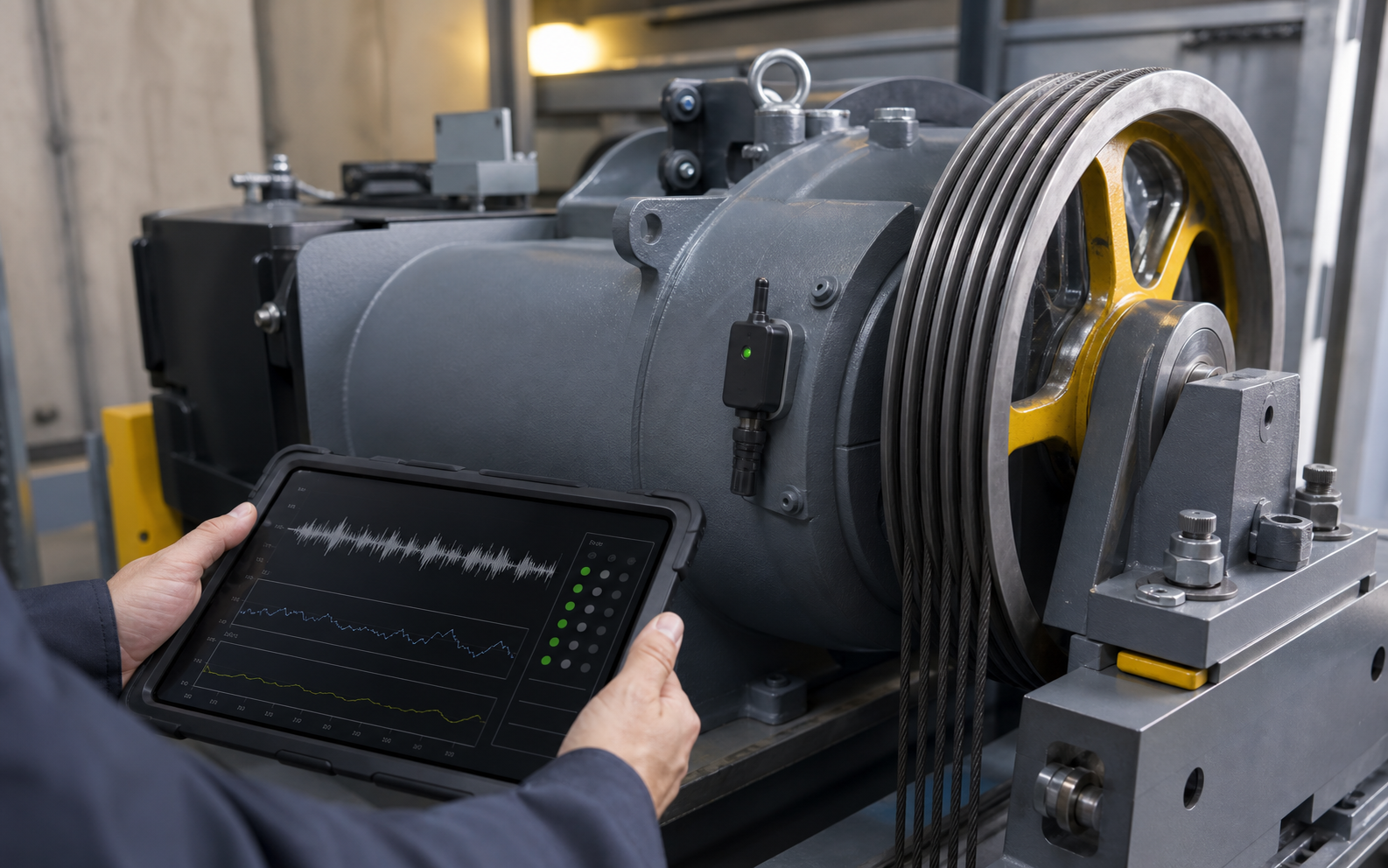
From operating data to an early warning
Depending on the equipment, monitoring can track door cycles, journeys, fault codes, operating time, vibration, temperature and electrical values. Trends are compared with the elevator's normal behavior.
What can be detected
Gradual changes such as increasing door time, repeated fault codes, rising vibration or temperature may provide an early signal. The data should be interpreted with maintenance records and on-site findings.
What cannot be predicted reliably
Sudden breakage, external damage, utility interruption and every electronic failure cannot be forecast. Monitoring reduces uncertainty; it does not eliminate failures.
Monitoring complements maintenance
Remote data helps prioritize checks and prepare parts, but it does not replace on-site maintenance, functional tests or periodic inspection.
Frequently asked questions
Can every elevator failure be prevented?
No. Monitoring can identify some developing changes, but sudden damage and external events remain possible.
Can older elevators be monitored?
Some can use additional sensors and gateways. Compatibility and available data depend on the controller and technical condition.
Does remote monitoring replace maintenance?
No. It supplies additional evidence but does not replace physical checks, planned maintenance or periodic inspection.