
Smart Mobility
How do smart elevators manage building traffic?
A smart elevator does not simply move faster. It makes earlier, better-informed decisions about which car should serve each journey.
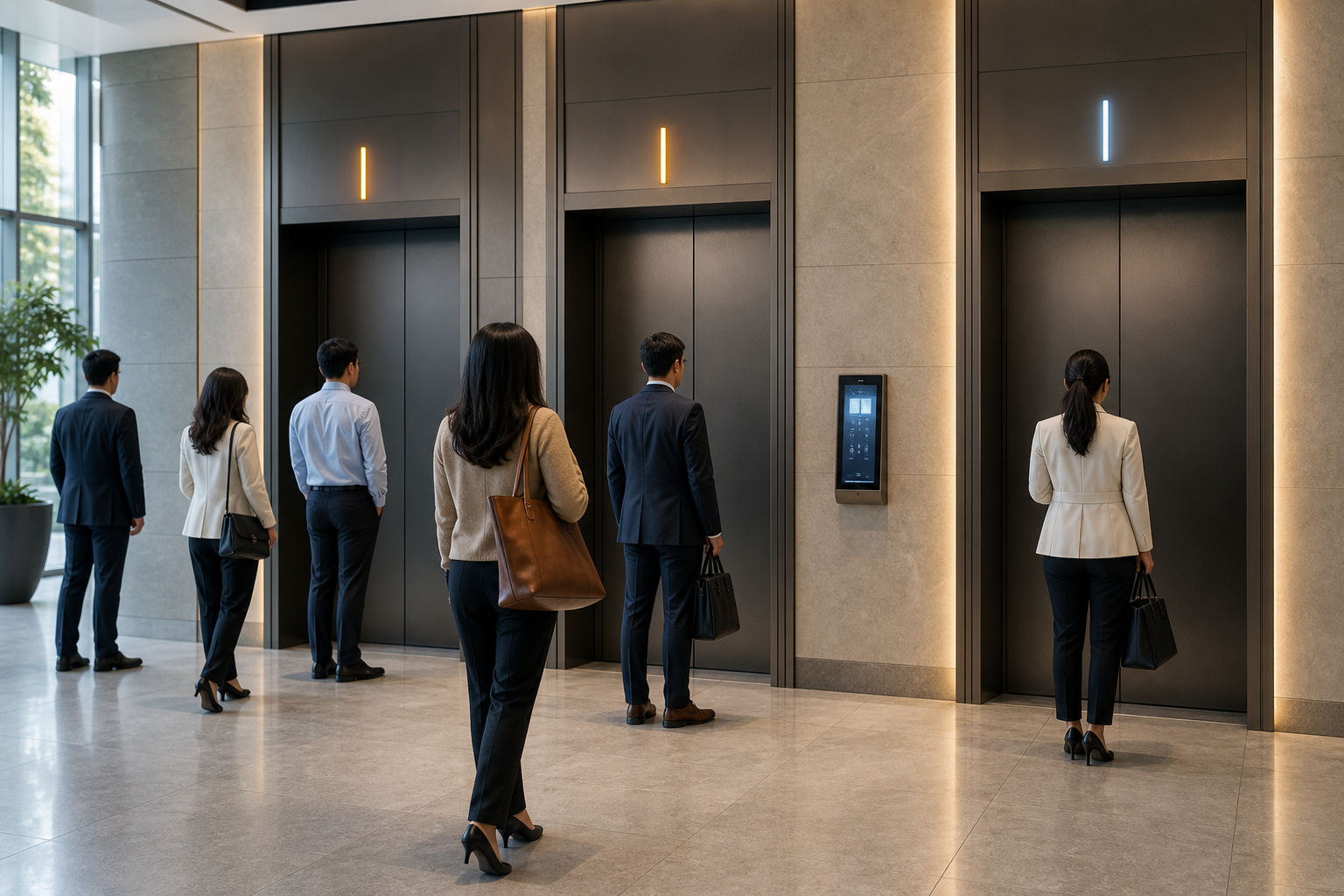
Traffic is managed before the car moves
The system combines calls, requested floors, car position, direction, occupancy and time-based demand patterns. In destination-control systems, the requested floor is known before boarding.
Group passengers with similar journeys
Passengers going to nearby floors can be assigned to the same car, reducing repeated stops and helping the group carry more people through busy periods.
Adapt to changing demand
Morning arrival, lunch movement and evening departure create different patterns. Suitable controls can change car positioning and assignment priorities as demand shifts.
Performance starts with traffic analysis
Results depend on car count, capacity, speed, floor population, lobby layout and passenger behavior. Smart control cannot compensate for an undersized or poorly planned system by software alone.
Frequently asked questions
Does a smart system make the elevator physically faster?
Not necessarily. Its main benefit is better assignment and fewer unnecessary stops; rated speed remains a property of the elevator.
Where is smart traffic control most useful?
It can be especially useful in offices, hotels, hospitals and high-rise buildings with concentrated or changing demand.
Can the system adapt when traffic changes?
Yes, if the installed controller and sensors support traffic-responsive modes and have been configured for the building.