
Pets
What should you consider when using an elevator with a pet?
A few simple habits at the landing and doorway can reduce the risk of a pet or lead being caught between moving doors.
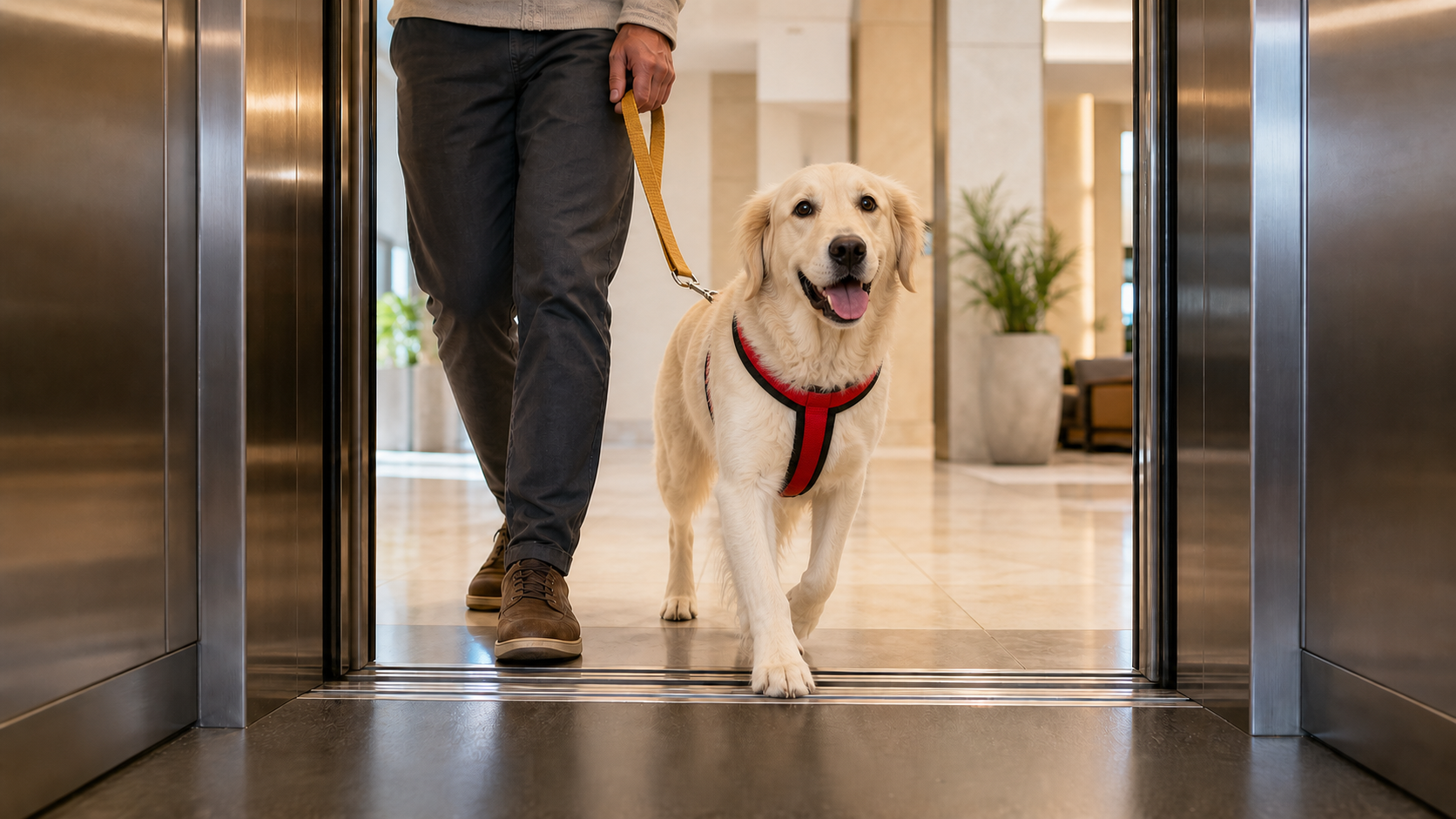
Keep the pet close at the doorway
The highest-risk moment is usually entering or leaving the car. A long lead can remain outside while the animal or owner is inside, so the lead should be shortened before crossing the threshold.
Before entering
Wait for the car to stop and the doors to open fully. Keep the animal calm and close, check that the car is level with the landing and allow other passengers enough space.
Inside the car
Keep the lead in your hand without allowing it to approach the doors. Small animals may be carried when this is safe and comfortable; larger animals should remain beside the handler.
If separation occurs
Do not try to pull a trapped lead against moving doors. Use the door-open or alarm control when possible and request assistance. Any abnormal door behavior should be reported to building management.
Frequently asked questions
Can elevator doors detect a thin pet lead?
Not every detection system can reliably identify every thin object. Never rely on the door sensor alone; keep the animal and lead together inside the car.
Should a small pet be carried?
It may be safer if the animal is comfortable being carried and the handler can do so securely, but the doorway must still be crossed only after the doors are fully open.
What if my pet is afraid of the elevator?
Avoid forcing the animal into a crowded car. Use calm, controlled training and seek professional animal-behavior guidance when necessary.