
Destination Technology
What is elevator destination control and how does it work?
Destination control groups journeys before passengers enter the car, allowing the elevator group to coordinate traffic with more information.
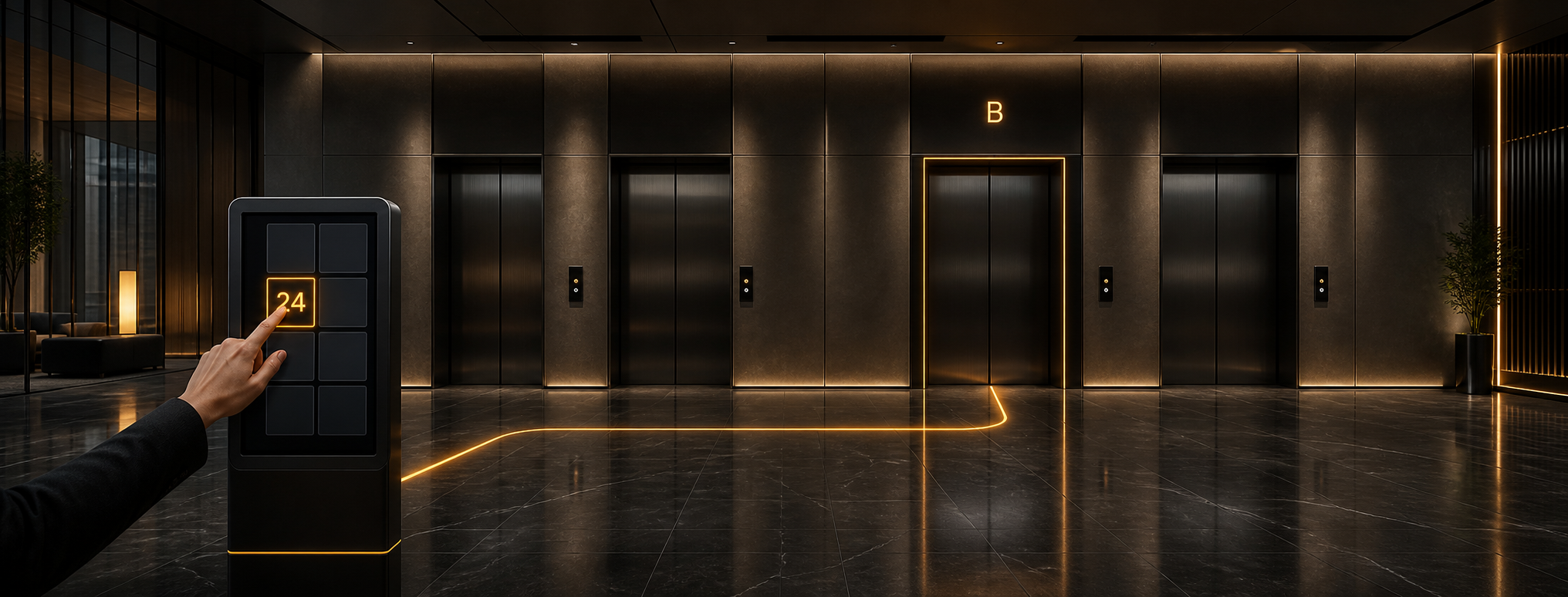
Select the destination before entering
The passenger enters the desired floor at a lobby terminal. The display assigns a car—such as A or B—and the passenger walks to that elevator. The controller evaluates destinations, car positions and current traffic.
How it differs from conventional calls
A conventional system receives only direction from the landing and the floor inside the car. Destination control knows the intended floor earlier and can group passengers with similar journeys.
Where it can help
High-rise offices, hotels and buildings with concentrated peak traffic may benefit from coordinated assignments. Performance depends on design, number of cars and passenger behavior.
Integration and accessibility
Terminals can work with access control and accessibility modes. Adding the system to an existing group requires review of controllers, terminal locations, interfaces and traffic analysis.
Frequently asked questions
How do passengers use destination control?
They select the destination at the lobby terminal, read the assigned car and board only that elevator.
Are there floor buttons inside the car?
It depends on configuration. Full destination systems may omit normal floor buttons, while hybrid systems retain selected controls.
Can it be added to existing elevators?
Sometimes, as part of modernization. Compatibility depends on controllers, group size, terminals, access control and traffic needs.