
Everyday Design
Why do elevators have mirrors?
A mirror can help a wheelchair user reverse toward the door, expand the visible field and make a compact car feel calmer and brighter.
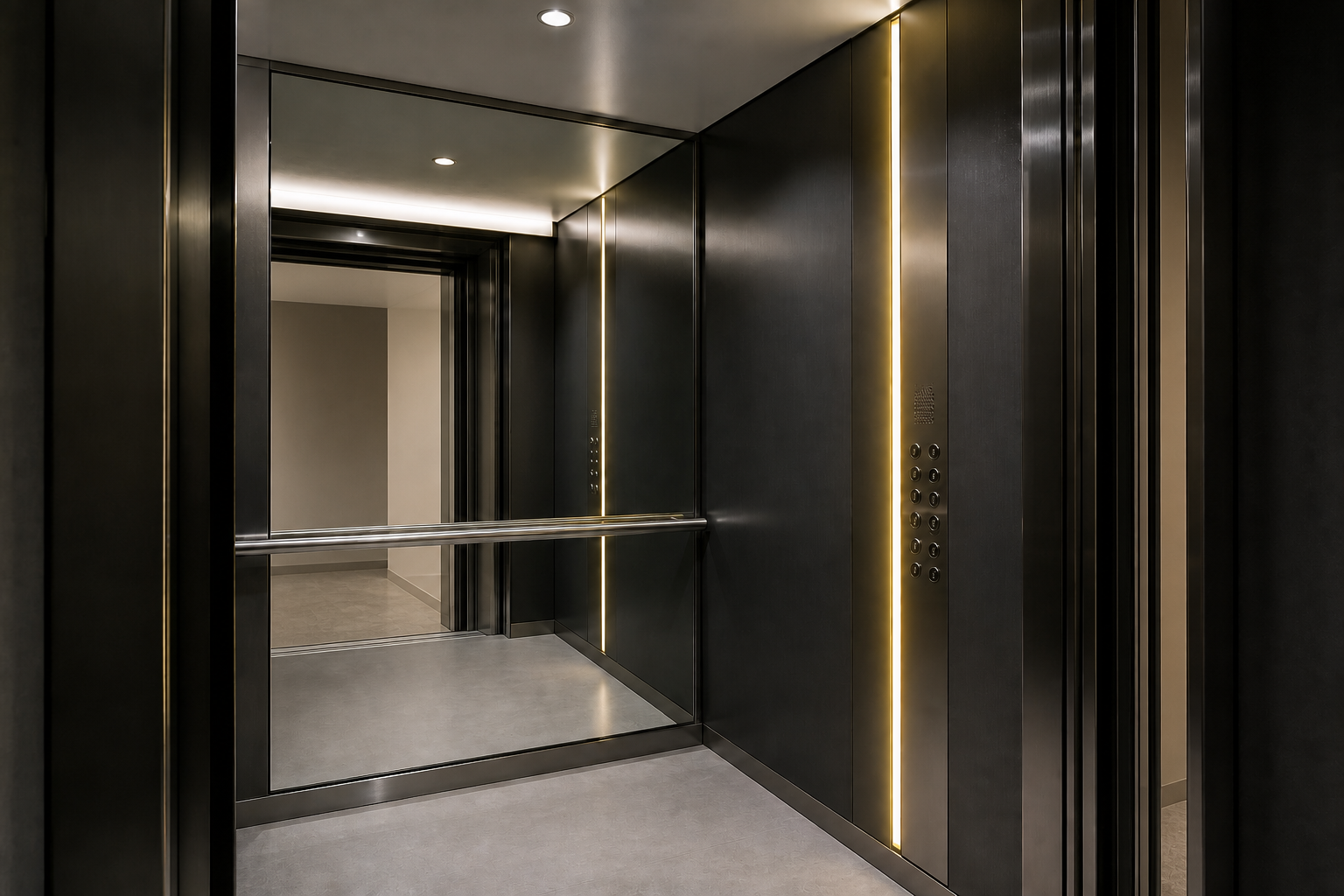
A simple surface can serve several functions
Mirror placement, dimensions and material should suit the car layout and accessibility design. A mirror is helpful only when it preserves clear controls, contrast, lighting and safe circulation.
Support rearward maneuvering
Where turning space is limited, a properly positioned mirror can help a wheelchair or mobility-device user see the doorway while reversing out of the car.
Expand visibility and spatial comfort
Reflections widen the field of view and can reduce the enclosed feeling of a small car. They also help occupants understand movement around them without turning fully.
Coordinate with lighting and durable finishes
Mirrors can distribute light visually, but glare, distortion, sharp edges and fragile finishes must be avoided. Design should account for cleaning, impact and replacement.
Frequently asked questions
Is a mirror mandatory in every elevator?
Not universally. Requirements depend on applicable accessibility rules, elevator type, car layout and project specification.
How does it help a wheelchair user?
It can provide a view of the doorway and area behind the chair when the user must reverse out of a car with limited turning space.
Do all car walls need to be mirrored?
No. One correctly located surface may serve the functional goal; excessive reflections can create glare or visual confusion.