
Warning Signs
Why does an elevator make noise?
Not every sound indicates the same problem. Where and when it occurs gives the technical team useful information.
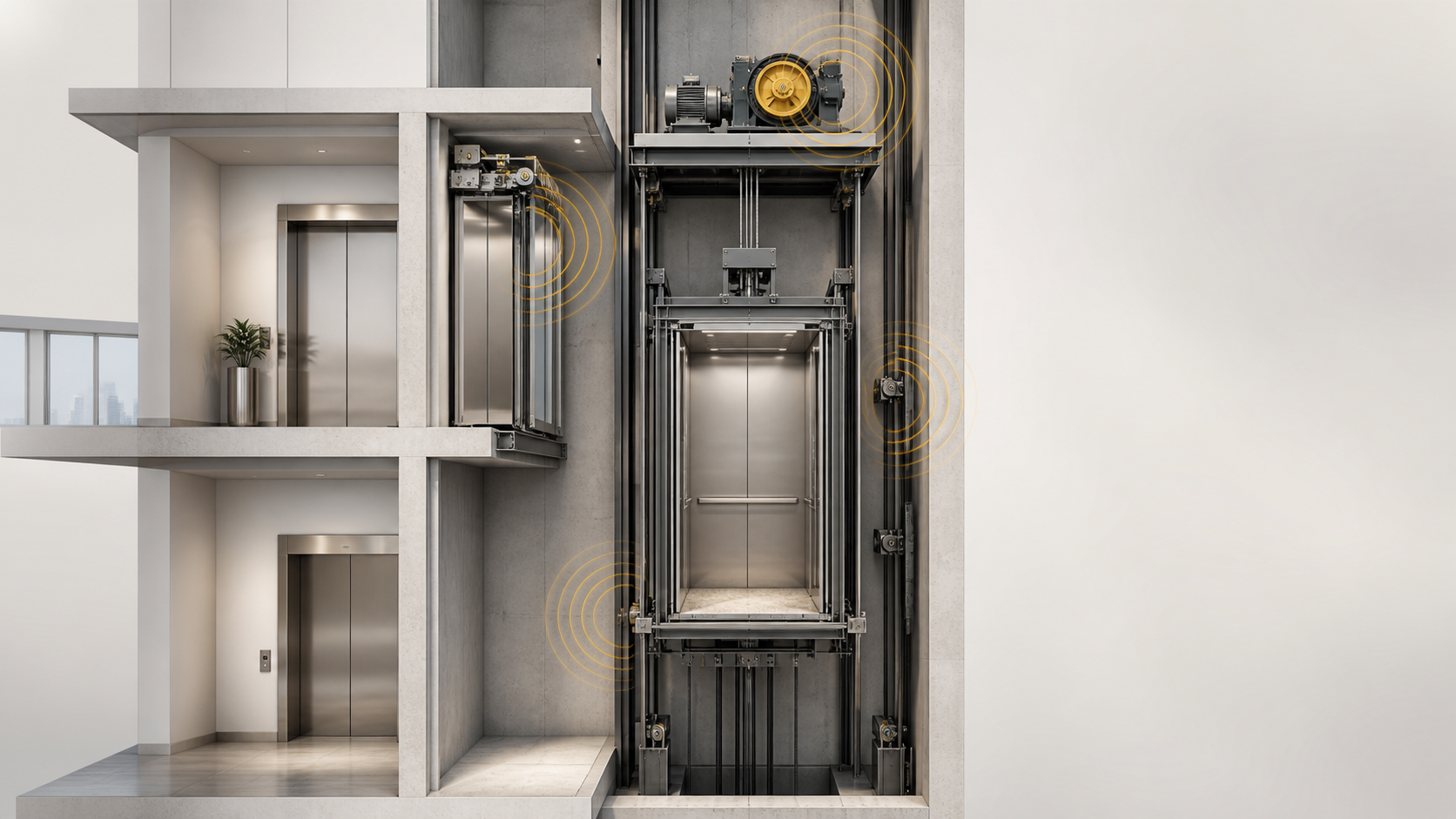
Noise is a symptom, not a diagnosis
An elevator contains doors, rollers, guide components, a drive system and ventilation equipment. A noise can therefore have several causes, and diagnosis should be based on an on-site technical assessment.
Notice when the sound occurs
Record whether the sound appears while the doors move, when the car starts or stops, at a particular floor or throughout travel. This information helps narrow down the source.
Do not attempt an improvised repair
Do not force doors, enter restricted areas or apply lubricant to visible components. Elevator equipment should be examined by qualified personnel using the correct procedure.
When to stop using the elevator
If noise is accompanied by strong vibration, irregular movement, burning smell, door malfunction or another clear safety concern, stop use when it is safe to do so and contact the service provider immediately.
Frequently asked questions
Is every elevator noise dangerous?
No. Some operational sounds are normal, but a new, louder or recurring sound should be documented and assessed.
Can I continue using an elevator that makes noise?
That depends on the accompanying symptoms. If there is vibration, irregular movement, a burning smell or door malfunction, stop use and call technical service.
What should I tell the service team?
Explain when and where the sound occurs, its character, whether the doors are moving and whether any vibration, smell or error code is present.