
Energy Efficiency
Can elevators recover the energy they use?
An elevator is not always only an electrical load. During some journeys, the motor can operate as a generator and return energy through a regenerative drive.
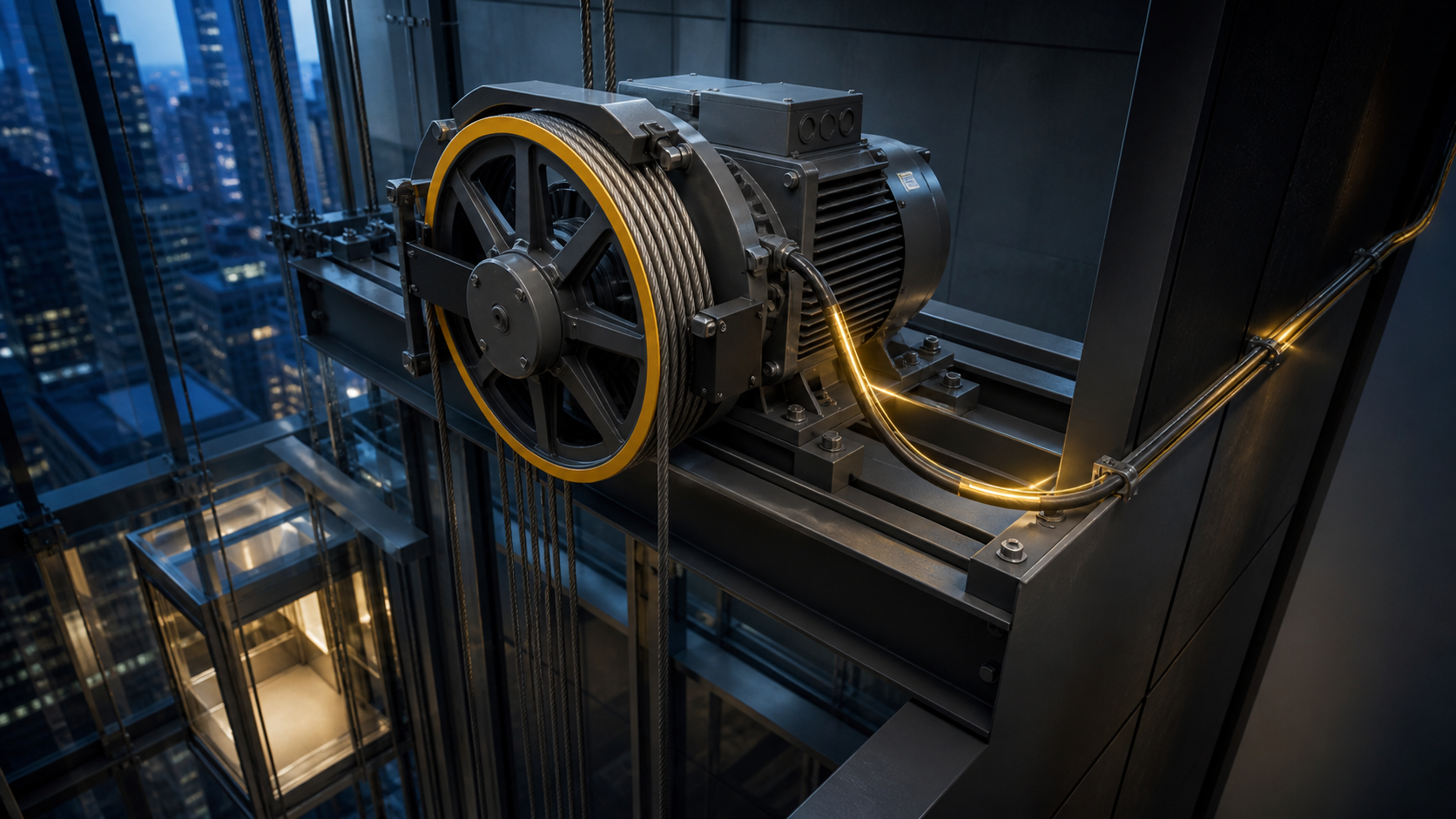
Braking energy can become useful electricity
In a counterweighted traction elevator, a heavily loaded car descending or a lightly loaded car ascending can drive the motor mechanically. Instead of dissipating all braking energy as heat, a regenerative drive can condition and return it.
When generation occurs
Energy direction depends on both travel direction and the balance between car load and counterweight. The motor can enter generating mode while the drive controls speed.
Where recovered energy goes
Depending on the design, electricity can feed the building's active loads or an appropriate battery or supercapacitor system. Power quality, interfaces and protection must be engineered for the site.
Savings require a site-specific calculation
Speed, travel height, capacity, journeys, load pattern and drive efficiency all matter. Measure the operating profile before comparing expected recovery with investment and maintenance cost.
Frequently asked questions
Can every elevator recover energy?
No. A compatible traction system and regenerative drive are required. Hydraulic and incompatible legacy systems need a different assessment.
Where is the recovered electricity used?
It may supply other active building loads or, with a separately designed storage system, be stored for later use.
Can regeneration be added to an existing elevator?
Sometimes. Motor, drive, controller, electrical installation, power quality and use profile must be assessed together.